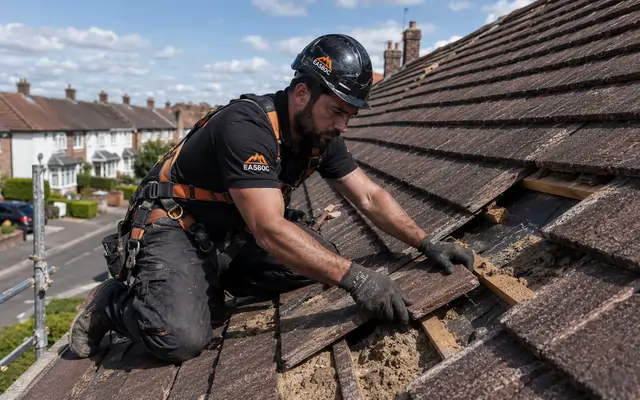
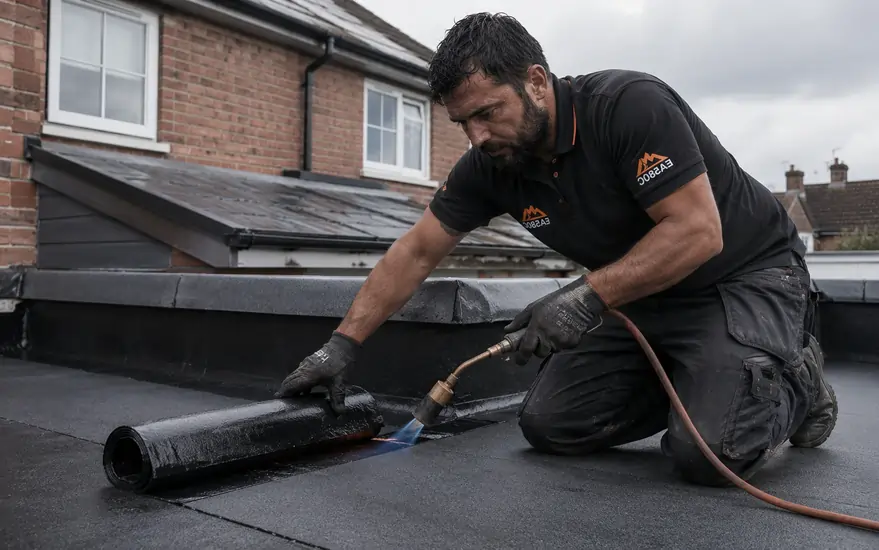
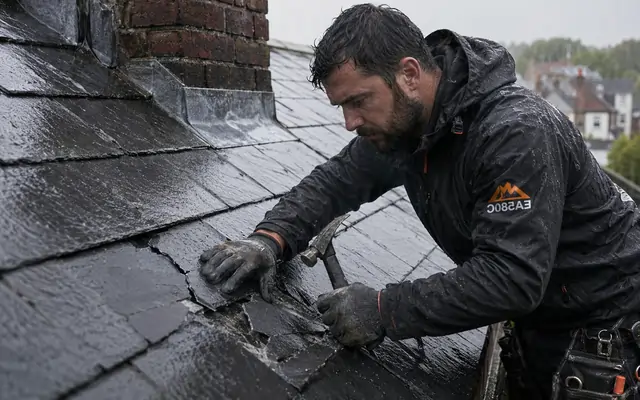
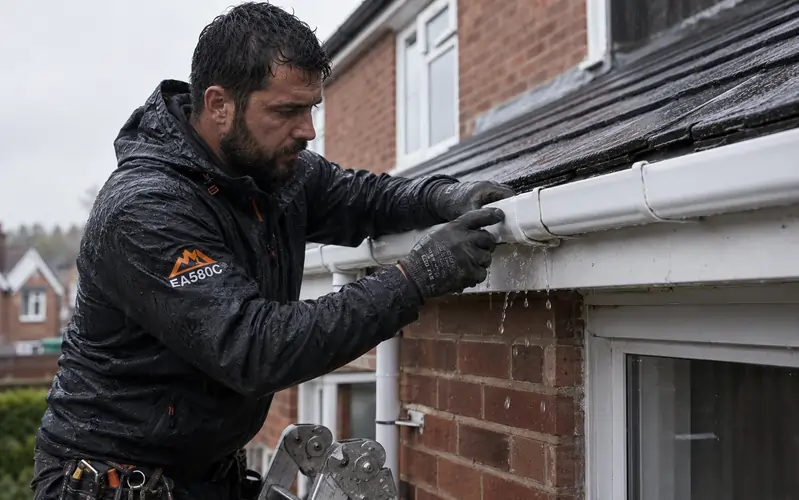
Every roofer passes up to 10 trade and individual related checks.
Free Domestic Use
It is free to use EmergencyLines, pay only the roofer for their service.
Dispatch Guarantee
Every roofer agrees to dispatch within 1hr where possible.
Emergency Roofing in Inverness
Inverness roofs are mostly Victorian and Edwardian slate - sandstone villas and terraces around Crown and Merkinch - with post-war and modern tile out on the Culloden, Smithton and Westhill estates. Old slate nails rust through and salt off the Moray Firth rots flashings, so a hard northern gale drops slates and strips courses, and one slipped slate across IV1 to IV3 can soak a top-floor ceiling within hours.
Inverness is the capital of the Highlands, set where the River Ness meets the Moray Firth, its Victorian sandstone tenements and terraces around the centre and Crown ringed by post-war and modern estates at Culloden, Smithton and Westhill. The water is very soft, but long, hard northern winters, salt off the firth and ageing slate roofs drive most of the work across IV1 to IV3.
Enter your postcode and EmergencyLines finds the nearest available roofer to you - day or night, weekends and bank holidays included. You get a number, you call it, and you speak to the roofer directly. No call centre, no middleman, no waiting on hold.
The roofing year in Inverness
When Inverness roofs tend to fail through the year - and the window to get ahead of it.
AutumnAtlantic gales drive rain in under the tiles.
Winter50 air-frost days a year drive freeze-thaw into every hairline crack and tired flashing - the peak season for leaks.
Spring-summerThe repair window: clear gutters and put winter's damage right before the next storm season.
Common roofing emergencies in Inverness
These are the roofing callouts we see most across Inverness, shaped by the local housing and weather:
Slipped slates on Victorian sandstone roofsOld nails rust through on the slate roofs of Crown and Merkinch terraces, dropping slates after a hard northern gale.
Storm tile loss on exposed estate roofsWind off the Moray Firth lifts loosely-nailed slates and tiles on Westhill and Scorguie roofs, stripping a course in one gust.
Parapet and box gutters blocking on villasHidden parapet gutters on Crown villas silt up and overflow back into the top-floor rooms.
Salt-corroded flashings and fixings by the firthSalt air rots nails and lead flashings on Merkinch roofs, so fixings fail and water tracks in early.
Chimney lead failure on tall sandstone housesMortar-keyed lead on Crown chimneys lifts in the wind, sending rain straight down the chimney breast inside.
Slipped slates on Victorian sandstone roofs and storm tile loss on exposed estate roofs come up again and again here - usually down to the age and style of Inverness's housing. Whatever the cause, the priority is the same: a verified roofer covering Hilton, Culloden and the rest of the city can make it safe quickly and tell you the cost before any work begins.
Roofs and weather in Inverness
Inverness's roofs are mostly piended slate tenement roofs with shared gutters; concrete interlocking tiles, with felt flat roofs on extensions and garages - and with 1000 mm of rain a year and salt-laden coastal air, a slipped tile or a tired flat roof soon turns into a leak.
Typical roofspiended slate tenement roofs with shared gutters; concrete interlocking tiles, with felt flat roofs on extensions and garages
Annual rainfall1000 mm
Air-frost days50/yrfreeze-thaw on tiles & flashing
Local housing & conditions
VictorianEdwardianTenementPost-war1960s-70sSevere winter frostsAtlantic storm exposureCoastal salt exposureLong heating season
Sources: Water-supply hardness by postcode area (mg/l CaCO₃), UK water companies; Open-Meteo ERA5 reanalysis, 2015-2024 daily means (air-frost days & annual rainfall); Build-era profile derived from local housing stock.
Quick check: what's it doing?
Pick what's happening and we'll give you the likely cause and the safe first step - then enter your postcode to reach a verified Inverness roofer.
Act now
Likely cause: A live leak - usually a slipped tile, failed flashing or blocked valley letting rain track in.
Do this now: Move valuables and put a bucket under it; do not go up on a wet roof. Get a roofer out before more rain.
Same-day
Likely cause: Nail fatigue or storm uplift has stripped a course, leaving the felt exposed.
Do this now: Stay off the roof and book a temporary cover - especially if more wind or rain is forecast.
Same-day
Likely cause: Felt or EPDM has split at a seam, or the falls have sagged so water stands and finds the joint.
Do this now: Clear any obvious debris from the outlet; get the seam patched before it tracks inside.
Same-day
Likely cause: A blockage or a failed joint is sending water down the wall instead of the downpipe.
Do this now: Note where it spills; a roofer can clear and reseal it quickly before it soaks the wall.
Same-day
Likely cause: The lead flashing or soakers around the stack have lifted or corroded.
Do this now: Catch any internal drip and book a roofer - flashing leaks rarely fix themselves.
Before your roofer arrives in Inverness
A few minutes of prep can limit the damage and get you sorted faster once the roofer is on the way:
Move furniture and valuables out from under any leak
Put down buckets and towels to catch the water
Stay off the roof - wet, damaged surfaces are dangerous
Photograph the damage for your insurer before you tidy up
Inverness areas and postcodes we cover
Our verified Inverness roofers cover Crown, Dalneigh, Hilton, Culloden, Smithton and Westhill, and every other neighbourhood besides - across the IV1, IV2 and IV3 postcode districts and the wider Highland. If your postcode is in Inverness, there's a roofer near you.
Crown - grand Victorian sandstone villas and terraces on the hill, running parapet gutters and ageing chimney lead
Dalneigh - post-war estate west of the river, with long communal pipe runs and dated fuse boards
Hilton - 1950s-60s estate to the south-east, prone to felt-roof leaks and frozen pipe runs
Culloden - large modern estate to the east, running combi boilers and modern ring mains
Smithton - modern estate housing east of the firth, with modern tile roofs and combi systems
Westhill - newer estate on the eastern edge, exposed to hard frosts and wind-driven rain
Inshes - modern estate near the retail park, running modern wiring and combi systems
Holm - post-war and modern housing to the south, prone to slipped tiles and long pipe runs
Kinmylies - 1970s estate west of the river, running flat extension roofs and tired ring mains
Raigmore - post-war estate near the hospital, prone to communal stack blockages and dated boards
Merkinch - dense Victorian terraces by the canal and firth, sharing tired stacks and salt-corroded fittings
Scorguie - post-war and modern housing on rising ground, exposed to storm tile loss and frost
Emergency roofing in Inverness: your questions
How fast can a roofer reach me in Inverness?
As soon as you enter your postcode we find the nearest available roofer and hand you their number. There's no dispatcher in between - you call and agree timing with the roofer yourself, so most Inverness jobs are arranged within minutes.
Which parts of Inverness do you cover?
Every Inverness postcode and the surrounding Highland - from Crown, Dalneigh, Hilton, Culloden, Smithton and Westhill, through to the outer suburbs. Wherever you are in the city, there's a vetted local roofer on the network.
What's the most common roofing emergency in Inverness?
In Inverness, slipped slates on Victorian sandstone roofs and storm tile loss on exposed estate roofs top the list - often down to the city's older housing stock. Describe what's happening on the call and your roofer arrives prepared.
Is there a call-out charge in Inverness?
No - it costs nothing to enquire. You only pay once you've spoken to the roofer, agreed the work and it's complete. There's no charge just to find out who's available near you in Inverness.
Why do Inverness slate roofs lose slates in storms?
The Victorian sandstone terraces and villas around Crown and Merkinch were roofed in slate fixed with iron nails, and after a century those nails rust through - "nail sickness" - so a hard Highland gale shakes slates loose, with salt off the firth speeding the corrosion. A few can be refixed, but a roof shedding slates every storm usually needs stripping and re-slating. Getting it looked at quickly stops water reaching the sarking across IV2.
Does the firth air really damage my Merkinch roof faster?
Yes - salt-laden air off the Moray Firth around Merkinch corrodes the nails, lead flashings and fixings faster than inland, so slates work loose and flashings fail earlier. Using non-ferrous fixings and good-quality lead when repairs are done makes them last in the coastal setting. A roofer should check the flashings and fixings as well as the slates while access is up across IV3.
Water is coming in at the top of my Crown villa - why?
Many of the grand sandstone villas around Crown have hidden parapet or box gutters behind the frontage, and once these silt up with grit and moss the water backs up and finds its way into the top-floor ceilings. Clearing and re-lining the gutter is the fix, not patching the ceiling. A roofer should check the lead and outlets while access is up across IV2.
EmergencyLines keeps a network of vetted roofers across Inverness on call around the clock, so there's almost always someone close by. Enter your postcode at the top of the page to see who's available near you right now - it's free to check, and you only pay once the job is done.